Use your existing website
Adopt shared descriptions without rebuilding all your pages or replacing your content platform.
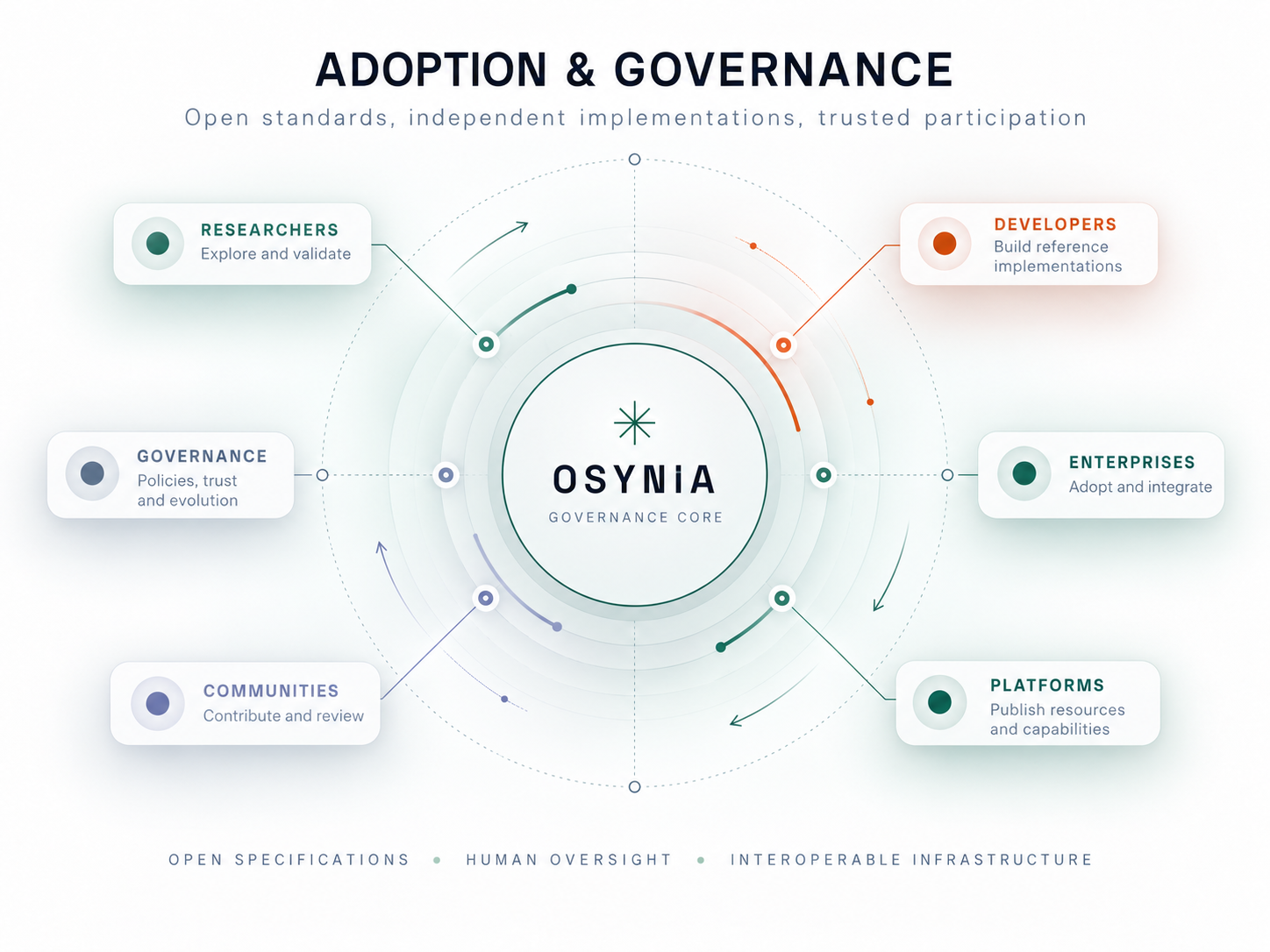
OSYNIA is intended to be a shared set of specifications, not a product that everyone must buy or a replacement for existing websites.
Adopt shared descriptions without rebuilding all your pages or replacing your content platform.
Use open tools, build in-house, or choose an optional managed service. The standard should not lock you in.
Publishers retain ownership of information and decide which actions people or systems can perform.
Publish specifications, schemas, validators, conformance tests, baseline SDKs and a self-hostable reference runtime under appropriate open licences. Permit independent, interoperable implementations. Any commercial hosting, indexing, governed synchronisation, analytics or service-level support remains optional.
Reuse HTTP/URI, JSON-LD, Schema.org, OpenAPI, OAuth/OIDC and relevant agent protocols where suitable. Build interoperability profiles and mapping adapters before proposing incompatible new infrastructure.
Community decision-making, contribution policies, licensing, trademark usage, security reporting and specification change control must be published and reviewed before claims of formal standards status.
Keep sources and editorial status visible. Do not treat generated descriptions as unquestionable facts.
Check identity and permissions on the server. Require consent and approval for consequential actions.
Use version checks, approval, history and rollback rather than silently changing all linked content.
Start with small useful schemas and automate only where the benefits justify the work.
Assess source authority, freshness, spam and manipulation before showing federated results.
Provide migration adapters and conformance tools, and test against incremental improvements to existing standards.
Contribute technical review, licensing expertise, accessibility feedback or an independent implementation.